Selecting the wrong drone battery can ground your UAV program — poor flight time, premature cell degradation, or worst case, a mid-flight failure. This guide walks agriculture drone operators, UAV OEMs, and industrial UAV buyers through every variable that matters.
1. Voltage (Cell Count / S-Rating)
Voltage is determined by the number of lithium cells in series — what the industry calls the "S-rating". Each lithium cell has a nominal voltage of ~3.7V.
- 4S (14.8V) — Lightweight drones up to 5 kg, inspection UAVs, small consumer frames
- 6S (22.2V) — Mid-size agriculture drones (5–15 kg), mapping UAVs, delivery prototypes
- 12S (44.4V) — Heavy-lift agriculture drones (15–30 kg), large cargo UAVs, defense platforms
Always match battery voltage to your ESC (Electronic Speed Controller) and motor KV rating. Running 12S on a motor rated for 6S will burn it out immediately. Consult your airframe manufacturer's spec sheet before ordering.
2. Capacity (mAh) — Flight Time vs. Payload
Capacity in milliamp-hours (mAh) dictates how long you can fly — but it's not a simple "bigger is better" equation. A larger battery is heavier, and every gram of battery weight trades off against payload or reduces your power-to-weight ratio.
Estimated flight time (min) = (Capacity mAh × 60) ÷ (Average current draw mA)
Average current draw = Total system watts ÷ battery voltage
For a 10L agriculture spraying drone at 12S with 25kW total power draw, a 22,000mAh battery typically delivers 12–15 minutes of flight time per charge. For mapping missions requiring 30+ minutes, a higher capacity pack (32,000–40,000mAh) at lower average draw may be optimal — but verify your airframe's maximum take-off weight (MTOW).
3. Battery Chemistry — LiPo vs Semi-Solid State
This is where the biggest technology gap in the Indian market exists. Most drone operators have used traditional LiPo (Lithium Polymer) batteries for years. But in 2025–26, semi-solid state lithium batteries are becoming the standard for professional Indian UAV operators.
| Parameter | Traditional LiPo | Semi-Solid State (Nexfly) |
|---|---|---|
| Energy Density | 150–200 Wh/kg | Up to ~338 Wh/kg |
| Cycle Life | 100–200 cycles | 300–500 cycles |
| Thermal Safety | Moderate | High |
| Weight (same capacity) | Higher | 30–40% lighter |
| Operating Temp (India) | Limited in peak summer | Stable up to 60°C |
For Indian conditions — extreme summer heat in Punjab, Rajasthan, and Telangana where agricultural spraying peaks — thermal stability is critical. Semi-solid state batteries from Nexfly maintain consistent discharge curves even above 45°C ambient temperature, where conventional LiPo packs begin to swell and underperform.
4. C-Rating — Peak Discharge Capability
The C-rating tells you the maximum continuous discharge rate relative to capacity. A 10C rating on a 10,000mAh battery means it can discharge at 100A continuously.
Agriculture drones typically need 15–25C continuous with 40–50C burst for throttle peaks. Multi-rotor cinematography drones may need higher burst ratings. Always spec with a 20% safety margin above your calculated peak draw to prevent voltage sag and BMS cutoffs during aggressive manoeuvres.
5. BMS Quality — The Most Overlooked Factor
The Battery Management System (BMS) is the brain of your drone battery. It handles:
- Cell balancing (prevents individual cell overdischarge)
- Overcharge protection
- Short circuit cutoff
- Temperature monitoring
- State of Charge (SoC) reporting to your flight controller
Cheap batteries often use a minimal BMS that fails to protect cells under load. Over time, an unbalanced pack will have 1–2 cells degrading faster, dramatically reducing overall capacity and causing sudden voltage drops mid-flight. Always ask your battery supplier about their BMS specification — cell balancing accuracy (target: ±5mV), temperature cutoffs, and whether SoC data is accessible via your GCS.
6. Connector & Form Factor
In India, most agriculture drone platforms — imported airframes and locally built OEM sprayers alike — use AS150 or XT90 connectors for high-current discharge, and XH2.54 balance leads. Confirm your battery supplier provides the right connector and that the physical dimensions fit your battery tray. Some platforms have proprietary locking mechanisms that only accept factory batteries — a detail to verify before ordering custom packs.
7. Indian OEM Compliance — What Changes in 2026
With DGCA's PLI scheme for drones and the push for Make in India UAV components, Indian drone OEMs are increasingly required to source locally manufactured batteries for government tenders. Batteries from Indian manufacturers like Leolus Energy come with:
- Indian manufacturing certificates (for government procurement)
- Local warranty support with faster RMA cycles
- Custom BMS tuning for specific Indian airframe integrations
- No import duty (saving 18–25% vs imported batteries)
Summary: Drone Battery Selection Checklist
- Match S-rating (voltage) to your ESC/motor specification
- Calculate capacity vs. weight trade-off using flight time formula
- Choose semi-solid state chemistry for Indian summer conditions
- Verify C-rating with 20% safety margin above peak draw
- Confirm BMS quality — cell balancing accuracy and temperature protection
- Match connectors and physical dimensions to your airframe
- For government tenders, prioritize Indian-manufactured batteries
Leolus Energy's Nexfly series covers all configurations from 4S 11,500mAh to 12S 40,000mAh in semi-solid state technology, with custom BMS tuning available for OEM integrations. Contact our engineering team to get a specification recommendation for your specific UAV platform.

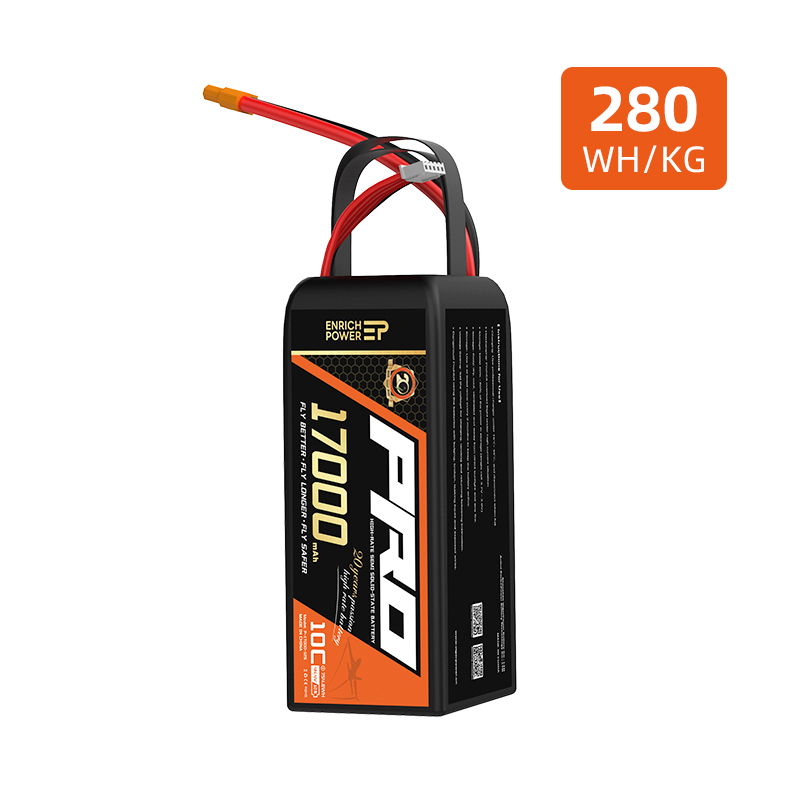 Nexfly Drone Batteries